By clicking “Accept All Cookies”, you agree to the storing of cookies on your device to enhance site navigation, analyze site usage, and assist in our marketing efforts. View our Privacy Policy for more information.
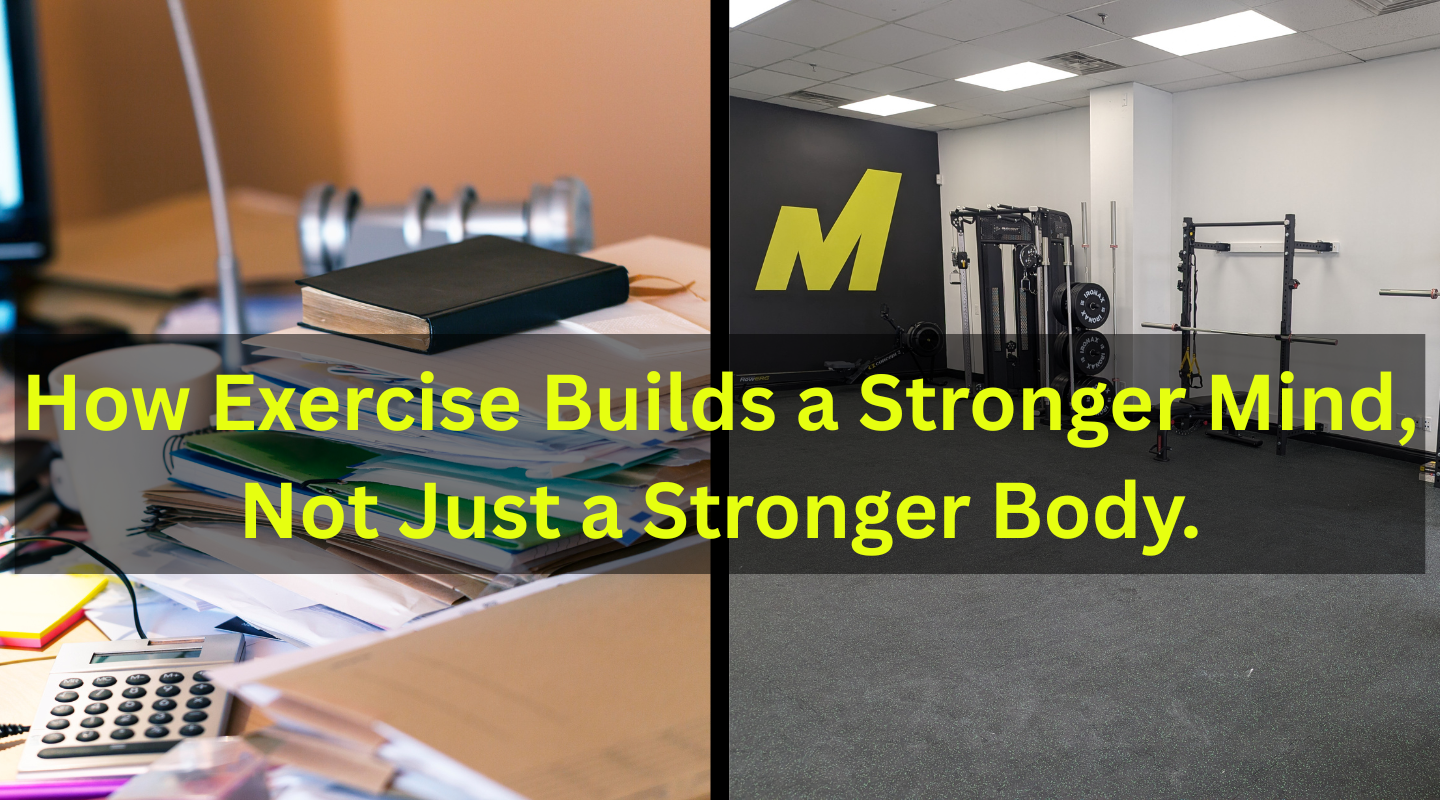
Training for Clarity: How Exercise Builds a Stronger Mind (Not Just a Stronger Body)
Discover how structured training improves mental clarity, focus, and resilience and why it’s the key to thriving under life’s daily stress.
By
January 26, 2026
Related

Most people start training to get fitter, stronger, or leaner. But they soon realize a bonus benefit shows up somewhere else: in your mind.
When you train consistently, you don’t just change how your body feels. You change how you think, lead, and show up in every part of your life.
And for busy parents and professionals juggling work, family, and a never-ending list of decisions, that mental clarity might be the most valuable result of all.
The Burnout Loop: When Life Feels Too Full to Train
One of my clients once described it perfectly — “I’m too stressed to work out, but I feel worse because I don’t.”
That’s the burnout loop.
You’re exhausted, stretched thin, and short on time, so you skip the gym. Then your energy drops even more, stress builds, and you fall further behind.
It’s not a discipline problem, it’s a structure problem.
When your schedule, energy, and motivation all pull in different directions, you need a system that makes training automatic.
Movement Is Mental: Why Training Clears the Fog
Some of my best ideas don’t come at my desk, they come between sets.
Movement changes your chemistry. It lowers stress hormones, boosts focus, and increases the brain’s supply of dopamine and serotonin, the things that keep you alert, creative, and calm.
That’s why a good training session can leave you feeling sharper than a long weekend of “rest.”
When you move your body, you create space in your mind.
Exercise isn’t just for your muscles. It’s maintenance for your brain.
When Training Doesn’t Help (and Why That’s Not Your Fault)
If you’ve tried training before and it didn’t help, you’re not broken, your plan probably was.
Random workouts or extreme programs might feel productive at first, but they often do the opposite of what you need.
They spike stress hormones, overload recovery, and add more noise to an already full life.
The right program should make you feel better, not more drained.
That’s why at Momentum, we design structure around progress and recovery.
You shouldn’t need willpower to stay consistent. You need a plan that gives back more than it takes.
You Don’t Need to Push Harder. You Need Clarity
The people who need structure most are usually the ones holding everything together. They’re the leaders at work and at home.
You’re already pushing hard. You don’t need another challenge. You need a system that removes decisions from your plate.
That’s what good coaching does: it replaces mental fatigue with clarity.
When someone else owns the plan, you’re free to just show up and execute.
It’s one of the most underrated mental health benefits of exercise, that feeling of being guided, not guessing.
Strong People Ask for Help
High performers don’t do everything alone. They build systems that keep them consistent.
You delegate in business. You plan for your family. You collaborate at work.
Why treat your health any differently?
Coaching isn’t a crutch, it’s leverage.
It’s how you stay physically and mentally strong when life’s heavy.
Asking for help isn’t weakness. It’s leadership. It’s why all the big wig CEOs and entrepreneurs have trainers.
“Why It’s Called Training”
Training isn’t just something you do, it’s something you become.
Every time you show up, you’re practicing how to do hard things on purpose.
You’re building the same mental muscles you rely on outside the gym: focus, patience, composure, resilience.
That’s why it’s called training, not working out.
A workout is random effort.
Training is purposeful practice.
The barbell, the sled, the bike, they’re just tools to rehearse what real life demands from you: showing up when it’s hard, staying calm under pressure, and moving forward when motivation fades.
Do that consistently, and you start to carry that same confidence everywhere else. Into work, into parenting, into life.
The Real Return on Training
When you train with structure, you don’t just build fitness, you build capacity.
Those 60 minutes a few times a week pay you back in clarity, focus, and productivity.
They help you think better, lead better, and feel more like yourself again.
At Momentum, we make it simple to stay consistent so your training gives more than it takes.
Because training should make your life better, not worse
.png)

.png)
.png)